Unlocking Wealth with the BRRRR Strategy: Why It's Worth Doing Right
Buy, Refurb, Rent, Refinance, Repeat. The BRRR strategy can recycle capital across multiple properties — but only if each step is executed properly. Here's how it actually works.
Disclaimer: This article is general information only and is not financial, mortgage, tax, legal or investment advice. Property investment carries risk, and outcomes depend on the deal, finance, market conditions and execution. Always speak to qualified advisers — including a mortgage broker, accountant and solicitor — before making any decisions.
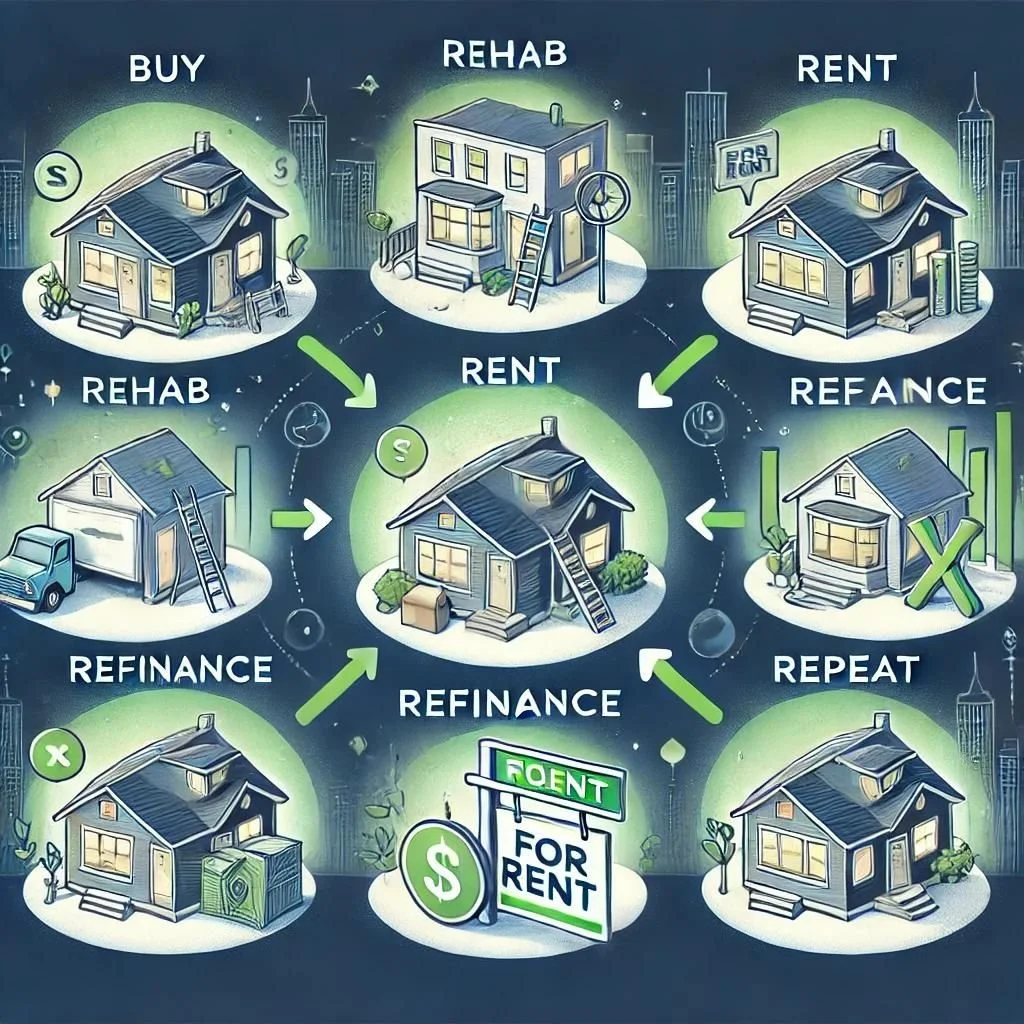
The BRRR method — Buy, Refurb, Rent, Refinance, Repeat — is a property investment approach that, when executed correctly, allows investors to recycle the same capital across multiple properties rather than locking it all into one asset.
That’s the theory. In practice, most failures come from treating each step as separate instead of as a connected system.
What the BRRR strategy actually involves
Buy — acquire a property below market value, typically one that needs work. The discount compensates for refurbishment cost and execution risk.
Refurb — improve the property to increase its value and rental appeal. Quality matters: poor workmanship creates voids, maintenance problems and tenant turnover.
Rent — let the property to tenants and establish a rental income track record. Lenders typically want 6 months of tenancy before refinancing.
Refinance — take a new mortgage against the improved value. If the property has been bought and refurbished correctly, the refinance releases most or all of the original capital.
Repeat — use the released capital to fund the next deal.
Where most BRRR attempts fail
The strategy is straightforward on paper. The failures are predictable.
Buying too close to market value
The discount on acquisition is not optional — it creates the headroom for refurbishment cost, finance cost, and the valuation risk on refinance. Paying too much at purchase means the numbers never recover.
Overspending on the refurb
Spending more on the renovation than the market will value is a common and expensive mistake. A lender’s valuer doesn’t care about your designer finishes — they care about comparable sold prices in the area.
Refinance valuation coming in low
This is where many BRRR deals stall. If the refinance valuation is £15,000 below your expectation, you can’t release the capital you planned. Your funds stay locked in the deal, and the “Repeat” step becomes impossible.
Build your comparables before you start the refurb, not after. Know what properties in that area at that standard have sold for. The valuer will use the same data — you should too.
Underestimating time
Time is a cost in BRRR deals. Refurbishment overruns, void periods while finding tenants, and lender processing time all eat into returns. Model a realistic timeline, then add a buffer.
Finance strategy not aligned from the start
You need to know which lender will do the refinance, at what LTV, and under what conditions — before you buy. Not after. Assumptions about refinancing that turn out to be wrong can trap capital for months.
BRRR in Sheffield and the North
Northern markets offer relatively accessible purchase prices and reasonable refurbishment costs compared to the South. A BRRR deal in Sheffield at £90,000–£130,000 purchase, £10,000–£20,000 refurb, and an end value of £130,000–£160,000 is a realistic target in the right postcodes.
The challenge: Northern valuers can be conservative, and lenders serving the Sheffield market have specific criteria. Knowing which lenders will value BRRR refurbs in S-postcode areas at 75% LTV is part of the research that needs to happen before you commit.
Running the numbers properly
The Property Calculator on this site includes a BRRR mode where you can model:
- Purchase price and deposit
- Refurbishment cost and timeline
- Bridge/purchase finance cost
- Refinance value and deposit percentage
- Cash left in the deal
- ROCE (return on capital employed)
Run the numbers. Stress test at a 10% lower refinance valuation. Check what happens if the refurb runs £5,000 over budget. If the deal only works in an optimistic scenario, it’s not a deal worth doing.
Why execution discipline matters
The strength of BRRR is capital recycling. The weakness is that every step must work for the system to function. One underperforming stage — a refurb that costs more, a void that runs longer, a valuation that comes in low — breaks the chain.
The investors who make BRRR work consistently are the ones who treat it as a system, not a shortcut. They know their buying criteria, their refurb costs per square foot, their lender options, and their target end values — before they make an offer.
Relevant tools:
- Property Calculator — BRRR mode with stress testing
- HM Land Registry — Verify ownership and sales history
- PropertyData — Comparable transactions and yield data
Free Property Calculator
Run the numbers before you fall in love with the deal.
Use the free property calculator to test BTL, BRRR and HMO scenarios — cashflow, yield, SDLT and stress checks, all in one place.
Open Property Calculator